
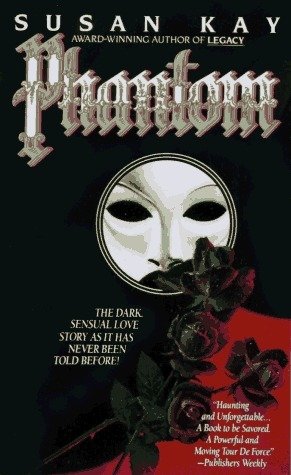
The story of the Phantom of the Opera has inspired a host of famous films and musicals. Here, in an imaginative tour de force, the Phantom's whole life is explored for the first time, from birth to death, and beyond.
Trigger Warnings / Content Notes
Great and Precious Things contains themes that may be sensitive for some readers, including:
- Child abuse & neglect (emotional and physical)
- Severe bullying and social ostracization
- Body horror & disfigurement (facial deformity, societal reactions to appearance)
- Emotional manipulation and obsession
- Unhealthy power dynamics
- Isolation and extreme loneliness
- Psychological trauma
- Violence and implied murder
- Death and grief
- Confinement and imprisonment
- Emotional cruelty (by individuals and society)
- Mental health struggles (including obsessive behavior and despair)
- Themes of rejection and dehumanization
My Take
Phantom is not a retelling—it is a reckoning.
Susan Kay takes one of literature’s most iconic figures and strips away the myth until only the man remains. What emerges is not a monster lurking beneath an opera house, but a profoundly wounded soul shaped by cruelty, isolation, brilliance, and longing. This novel asks a question the original story only hints at: What kind of life creates a phantom?
From the very beginning, the book is steeped in sorrow. Erik’s life is defined by rejection before he ever has a chance to understand himself. His genius—musical, architectural, intellectual—should have been a gift, but instead becomes another point of separation from the world. Kay makes it painfully clear that Erik is not born monstrous; he is made so, piece by piece, by a society incapable of seeing past his appearance.
What makes this novel extraordinary is its emotional honesty. Erik is not softened or sanitized. He is capable of tenderness and cruelty, devotion and obsession, brilliance and moral blindness—all at once. His love is intense and consuming, not because it is pure, but because it is rooted in deprivation. When he loves, he loves desperately, with the fear of someone who knows he is always one step away from abandonment.
Christine, too, is recontextualized. Seen through Erik’s eyes, she is not merely an object of desire, but a symbol of everything he was denied: beauty without punishment, affection without fear, a voice that is celebrated rather than hidden. Yet Kay never pretends that this love is healthy. Instead, she allows it to exist in its full complexity—tragic, unbalanced, and heartbreaking precisely because Erik does not know how to love without possession.
The prose itself is lush, melancholic, and immersive. Every chapter feels weighted with inevitability, as though the reader knows—just as Erik does—that happiness is always temporary, always fragile. There is no false hope here, no easy redemption. And that is the book’s greatest strength. Phantom does not offer comfort; it offers understanding.
This novel lingers because it reframes the entire myth. After reading it, the original story can never be quite the same. The Phantom is no longer a shadowy antagonist or a romanticized villain—he is a man shaped by relentless rejection, undone by the very humanity he was never allowed to express.
Phantom is a meditation on loneliness, beauty, cruelty, and the devastating consequences of a world that refuses compassion. It is not a love story in the traditional sense, but it is a deeply human one. And once you step inside Erik’s life, you don’t simply observe his tragedy—you feel it settle quietly, permanently, in your chest.
This is a book for readers who are willing to sit with discomfort, to examine the line between sympathy and accountability, and to mourn not just what was lost—but what was never allowed to exist at all.
Where To Find
- amazon
- audible
- goodreads
- kindleunlimited