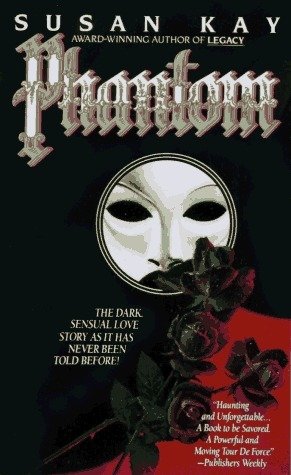
The story of the Phantom of the Opera has inspired a host of famous films and musicals. Here, in an imaginative tour de force, the Phantom's whole life is explored for the first time, from birth to death, and beyond.
Great and Precious Things contains themes that may be sensitive for some readers, including:
Phantom is not a retelling—it is a reckoning.
Susan Kay takes one of literature’s most iconic figures and strips away the myth until only the man remains. What emerges is not a monster lurking beneath an opera house, but a profoundly wounded soul shaped by cruelty, isolation, brilliance, and longing. This novel asks a question the original story only hints at: What kind of life creates a phantom?
From the very beginning, the book is steeped in sorrow. Erik’s life is defined by rejection before he ever has a chance to understand himself. His genius—musical, architectural, intellectual—should have been a gift, but instead becomes another point of separation from the world. Kay makes it painfully clear that Erik is not born monstrous; he is made so, piece by piece, by a society incapable of seeing past his appearance.
What makes this novel extraordinary is its emotional honesty. Erik is not softened or sanitized. He is capable of tenderness and cruelty, devotion and obsession, brilliance and moral blindness—all at once. His love is intense and consuming, not because it is pure, but because it is rooted in deprivation. When he loves, he loves desperately, with the fear of someone who knows he is always one step away from abandonment.
Christine, too, is recontextualized. Seen through Erik’s eyes, she is not merely an object of desire, but a symbol of everything he was denied: beauty without punishment, affection without fear, a voice that is celebrated rather than hidden. Yet Kay never pretends that this love is healthy. Instead, she allows it to exist in its full complexity—tragic, unbalanced, and heartbreaking precisely because Erik does not know how to love without possession.
The prose itself is lush, melancholic, and immersive. Every chapter feels weighted with inevitability, as though the reader knows—just as Erik does—that happiness is always temporary, always fragile. There is no false hope here, no easy redemption. And that is the book’s greatest strength. Phantom does not offer comfort; it offers understanding.
This novel lingers because it reframes the entire myth. After reading it, the original story can never be quite the same. The Phantom is no longer a shadowy antagonist or a romanticized villain—he is a man shaped by relentless rejection, undone by the very humanity he was never allowed to express.
Phantom is a meditation on loneliness, beauty, cruelty, and the devastating consequences of a world that refuses compassion. It is not a love story in the traditional sense, but it is a deeply human one. And once you step inside Erik’s life, you don’t simply observe his tragedy—you feel it settle quietly, permanently, in your chest.
This is a book for readers who are willing to sit with discomfort, to examine the line between sympathy and accountability, and to mourn not just what was lost—but what was never allowed to exist at all.
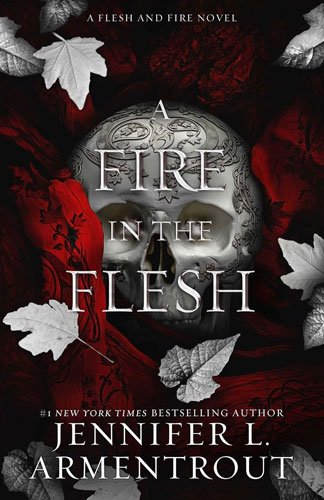
The only thing that can save the realms now is the one thing more powerful than the Fates.
After a startling betrayal ends with both Sera and the dangerously seductive ruler of the Shadowlands she has fallen madly in love with being held captive by the false King of the Gods, there is only one thing that can free Nyktos and prevent the forces of the Shadowlands from invading Dalos and igniting a War of Primals.
Convincing Kolis won’t be easy, though – not even with a lifetime of training. While his most favored Revenant is insistent that she is nothing more than a lie, Kolis’s erratic nature and twisted sense of honor leave her shaken to the core, and nothing could’ve prepared her for the cruelty of his Court or the shocking truths revealed. The revelations not only upend what she has understood about her duty and the very creation of the realms but also draw into question exactly what the true threat is. However, surviving Kolis is only one part of the battle. The Ascension is upon her, and Sera is out of time.
But Nyktos will do anything to keep Sera alive and give her the life she deserves. He’ll even risk the utter destruction of the realms, and that’s exactly what will happen if he doesn’t Ascend as the Primal of Life. Yet despite his desperate determination, their destinies may be out of their hands.
But there is that foreseen unexpected thread—the unpredictable, unknown, and unwritten. The only thing more powerful than the Fates…
Great and Precious Things contains themes that may be sensitive for some readers, including:
Read the first five or so chapters, skip to chapter 32 and you still won't miss anything vital. This is a filler book and though some of it does push the story forward it is by far and away not my favorite book in the series.
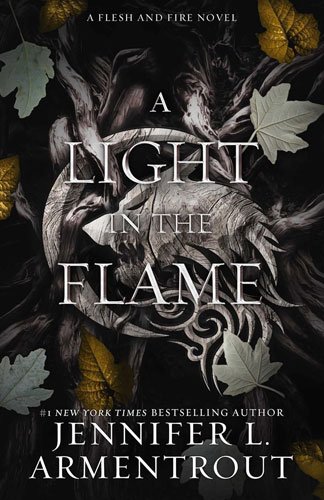
The only one who can save Sera now is the one she spent her life planning to kill.
The truth about Sera’s plan is out, shattering the fragile trust forged between her and Nyktos. Surrounded by those distrustful of her, all Sera has is her duty. She will do anything to end Kolis, the false King of Gods, and his tyrannical rule of Iliseeum, thus stopping the threat he poses to the mortal realm.
Nyktos has a plan, though, and as they work together, the last thing they need is the undeniable, scorching passion that continues to ignite between them. Sera cannot afford to fall for the tortured Primal, not when a life no longer bound to a destiny she never wanted is more attainable than ever. But memories of their shared pleasure and unrivaled desire are a siren’s call impossible to resist.
And as Sera begins to realize that she wants to be more than a Consort in name only, the danger surrounding them intensifies. The attacks on the Shadowlands are increasing, and when Kolis summons them to Court, a whole new risk becomes apparent. The Primal power of Life is growing inside her, pushing her closer to the end of her Culling. And without Nyktos’s love—an emotion he’s incapable of feeling—she won’t survive her Ascension. That is if she even makes it to her Ascension and Kolis doesn’t get to her first. Because time is running out. For both her and the realms.
Great and Precious Things contains themes that may be sensitive for some readers, including:
Jennifer L. Armentrout deepens everything introduced in the first book—emotion, tension, and intimacy—while raising the stakes in ways that feel both personal and epic. At its core, this is a story about trust: how fragile it is, how hard it is to earn, and how devastating it can be when it’s tested.
Sera’s character growth is the standout for me. She’s no longer just enduring the role she was born into—she’s questioning it, pushing against it, and daring to imagine a future shaped by her own choices. Her vulnerability feels raw and honest, and the emotional weight she carries is written in a way that lingers long after you turn the page.
The relationship at the heart of this book is intense, complicated, and deeply consuming. The banter is sharp, the chemistry undeniable, and the emotional connection feels earned rather than rushed. But this isn’t a soft or easy romance. Choices are made that hurt. Secrets exist for complicated reasons. And the story isn’t afraid to explore how good intentions can still cause real emotional damage.
What I appreciated most is that the narrative doesn’t gloss over pain. When trust is shaken, the emotional fallout is allowed to breathe. The hurt feels real, the reactions feel human, and the writing makes space for anger, confusion, and heartbreak without dismissing any of it.
As the danger surrounding the characters intensifies, the stakes rise steadily—politically, magically, and emotionally. Time becomes an enemy, destiny presses closer, and the cost of survival feels impossibly high. The tension builds relentlessly, leading to an ending that left me stunned and desperate to continue.
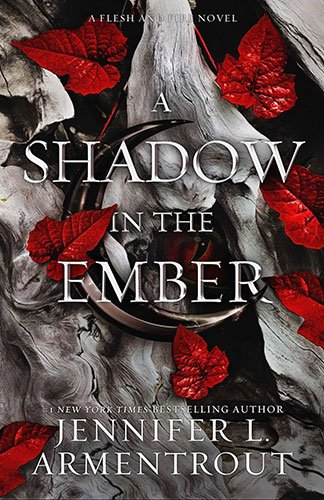
A Shadow in the Ember by Jennifer L. Armentrout is an epic fantasy romance that blends prophecy, forbidden desire, and ancient power into a story steeped in tension and longing.
Born and raised for one purpose, Sera has been trained since childhood to fulfill a destiny that will cost her everything. Conditioned to believe her life is expendable, she is sent on a dangerous mission: infiltrate the court of the feared Primal of Death and complete the task she was created for—no matter the personal cost.
But the god she is meant to deceive, Nyktos, is nothing like the monster of legend. Cold, controlled, and bound by his own unyielding responsibilities, he is a being shaped by duty, prophecy, and the weight of countless lives. As Sera is drawn deeper into his world, the lines between truth and lies, duty and desire, begin to blur.
With every secret revealed and every boundary tested, Sera must confront what she truly believes—about gods, fate, and herself. As attraction ignites into something far more dangerous, the cost of betrayal grows steeper, and the consequences of choice threaten to reshape not just their lives, but the world itself.
Dark, immersive, and emotionally charged, A Shadow in the Ember is the beginning of the Flesh and Fire series—an origin story filled with intrigue, slow-burn romance, and a love powerful enough to challenge destiny itself.
Great and Precious Things contains themes that may be sensitive for some readers, including:
There are moments as a reader when you open a book knowing the author is talented… and then there are moments when a story completely takes over your senses.
That’s exactly what happened when I stepped into A Shadow in the Ember by Jennifer L. Armentrout.
I already knew Jennifer could write. That wasn’t the question.
What I didn’t expect was how immersive this book would be—how deeply it would sink into my chest and refuse to let go.
From the very beginning, the world feels alive. Not just described, but felt. Every scene is layered with tension, history, and quiet dread, balanced by moments of yearning that ache in the best way. This is a story that doesn’t rush you. It pulls you under slowly, deliberately, until you realize you’re completely submerged.
The characters are where this book truly shines. They aren’t just complex—they’re emotionally rich, shaped by duty, trauma, and impossible expectations. Their choices feel heavy because the consequences are real. You don’t just understand them; you feel them. Their fear, their restraint, their longing—it all lands with full emotional weight.
I’ll admit, partway through I had questions. Big ones. The kind that make you pause and wonder if the pieces will ever fully click into place. But instead of frustration, there was trust. And that trust paid off. As the story unfolded, those questions were answered naturally, thoughtfully, in a way that made the journey feel intentional rather than confusing.
This is book one, and it shows—in the best possible way. The story isn’t finished. The stakes are still rising. The emotional threads are only beginning to tighten. And instead of feeling incomplete, it feels like standing on the edge of something epic, knowing the fall—or the flight—is still to come.
And then there’s the romance. Intense. Slow-burning. Charged with restraint and longing. The kind of connection that simmers beneath every interaction, blending intrigue, spice, and love into something that feels both dangerous and deeply intimate.
If you’re looking for a story that will consume you, challenge your emotions, and leave you desperate for the next page—and the next book—this deserves a spot on your TBR immediately.
Some books entertain.
Some books linger.
A Shadow in the Ember stays with you.
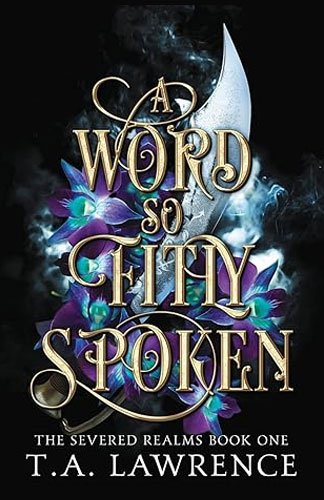
One stunning bride. One wedding. One night with the king. One execution come morning. Rinse and repeat.
When the fae king of Naenden returns home to his palace only to find that his human queen has committed treason by conspiring to assassinate him, he has the queen executed and decrees that once every mooncycle, he’ll marry a human woman from the kingdom, only to execute her the following morning.
Unless one woman offers herself as a sacrificial bride for the rest.
Asha isn’t worried about being chosen, of course. The decree was quite clear about beauty being among the top criteria for being selected as one of the king’s unfortunate brides. Asha is no beauty thanks to the illegal magic that inhabits her body, leaving her scarred and missing an eye. The same magic that occasionally possesses her voice so it can amuse itself by telling a never-ending story with a string of horrible cliffhangers.
The problem is Asha might not be a beauty, but her sister Dinah is. When Asha realizes Dinah is in danger of being selected as the king’s sacrificial bride, Asha decides she can’t live with that risk. So she offers herself instead.
Except on the night of their wedding the king grants Asha a final request. Naturally, she asks to tell her sister one last bedtime story. Naturally, the king eavesdrops.
The question is, will the story save her life or ruin it?
A tale of love and betrayal, vengeance and sacrifice, magic and romance, this imaginative retelling of 1,001 Nights will keep you guessing with each word.
The worldbuilding in A Word So Fitly Spoken is rich, the magic strange and beautiful, and the romance achingly tender without needing spice to make it powerful. One bride. One wedding night. Execution by morning. Again and again. The premise is haunting, but it’s Asha who makes it unforgettable.
Scarred, one-eyed, and carrying illegal magic that speaks through her voice, Asha offers herself as a sacrificial bride to save her sister. Not because she thinks she’ll survive—but because love leaves her no other choice.
What follows is a story about sacrifice, stories as survival, and a slow-burn connection built on curiosity, grief, and mercy. Every page hums with tension and quiet emotion, inspired by 1,001 Nights in the most beautiful way.
I finished this book emotional, stunned, and completely in love. Proof that when the story is this good, spice isn’t needed at all.
Spice: 🚫
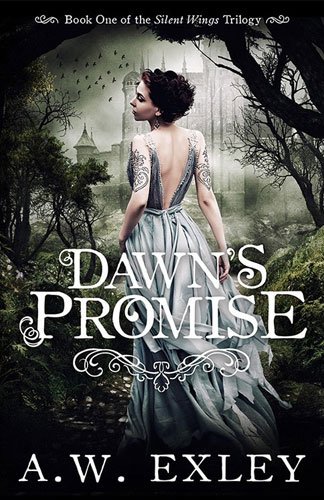
Born with fragile health, Dawn Uxbridge has lived a sheltered existence. Her lonely days are filled by drawing fanciful landscapes and nurturing plants. When tragedy strikes, she finds herself alone and penniless with only one talent—a green thumb.
Jasper, the Earl of Seton, is in need of a gardener to reclaim his derelict estate in the remote west of England. He expected a robust commoner, not a fragile young woman. With the next train a week away, Dawn has one chance to change the earl's mind and earn her place.
But all is not as it seems at the ancestral manor. The estate is full of secrets, ravens cluster on the parapets, and a ghostly young woman cries out at night. This garden conceals a rotten heart, and it plans to squeeze the last beat from Dawn's...
Dawn’s Promise contains themes and situations that may be sensitive for some readers, including:
War and military conflict
Violence and injury (non-graphic)
Death and loss
Grief and mourning
Trauma related to battle
Emotional distress
Power imbalances (rank, duty, and social structure)
Romantic and sexual content (mild to moderate, not explicit)
Themes of duty vs. desire
Steampunk-era societal inequality
Danger and peril
This book was more than I expected it would be. I was thinking just a regency romance but the twist was so much more and it gave me goosebumps!
Spice: 🌶️🌶️🌶️🌶️
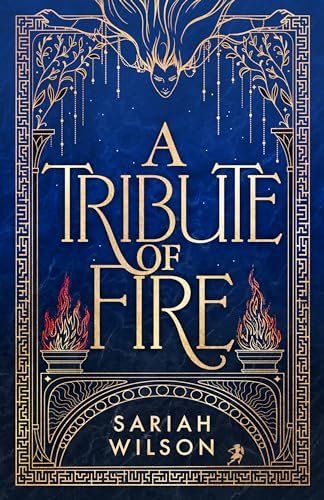
The fate of a cursed nation depends on a princess who must outwit a mortal enemy and outlast the trials of a death-defying ritual in a thrilling adventure by USA Today bestselling author Sariah Wilson.
Lia is the princess of Locris, a dying desert nation cursed centuries ago by an earth goddess—one still worshipped by the thriving and adversarial nation of Ilion. Every year, Ilion offers the goddess a sacrifice: two Locrian maidens forced to compete in a life-and-death race to reach her temple. In a millennium, no maiden has made it out of Ilion alive. This year, Lia is one of the hunted.
An education in battle gives her a fighting chance, but the challenges are greater than she feared: Lia’s beloved but untrained sister Quynh has been put in the path of danger. The winding streets of Ilion itself have been transformed into a labyrinthine maze of countless choices and dead ends. And if the risks weren’t significant enough, Lia is reluctantly drawn to the commandingly attractive Jason, an Ilionian sailor she loathes to trust and desires like no man before.
The tribute game is on. It’s up to Lia to lift the goddess’s curse, restore Locris to its former glory, and change the fate of every young woman destined to follow in her path.
This book starts out strong with some Quicksilver vibes. Then it moves into Hunger Games territory and then a splash of dragons. The world of Ilion is rich with characters and myth. The enemy's to lovers romance is a insta/slow burn. Meaning there is an instant attraction that we then play with for the entire book.
This is a strong female character that fights for all the things she needs to saver her people and her own life.
This is a very good read that ends on a cliffhanger but lucky for us this is a complete series and is available through Kindle Unlimited and Audible.
Spice I give 🌶️ for kissing and light petting.
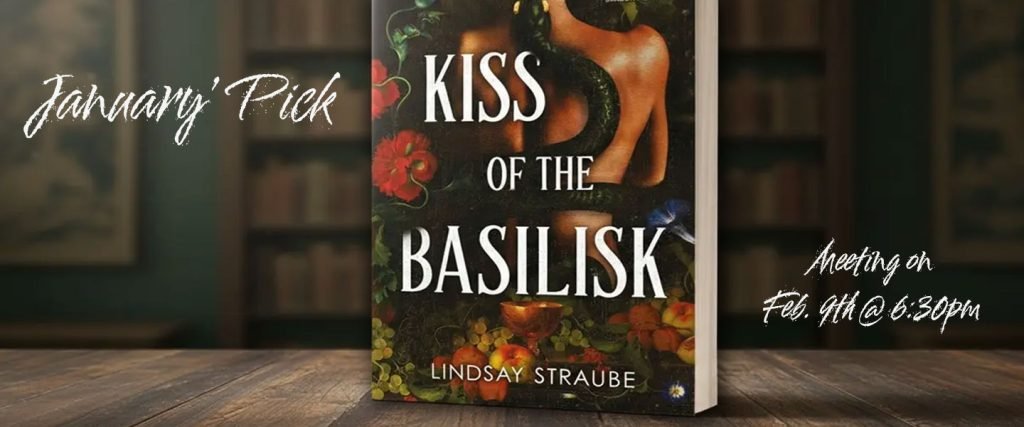
Every month, our book club chooses a story that sparks conversation, emotion, and a little obsession—and for January, Kiss of the Basilisk checked every box.
This novel plunges readers into a dark, myth-touched fantasy world where danger and desire coil tightly together. Straube blends lush atmosphere with high-stakes tension, crafting a romance that feels both intoxicating and perilous. The basilisk mythology isn’t just window dressing here—it shapes the power dynamics, the magic system, and the emotional core of the story.
✨ A bold start to the year
January is about fresh beginnings, and this book delivers a sharp, unforgettable opening to our reading year. It’s immersive from the first pages and refuses to play it safe.
🐍 Mythology with teeth
Basilisks are legendary creatures associated with death, power, and transformation. Straube reimagines this lore in a way that feels darkly romantic, making it ideal for readers who love fantasy with mythic depth.
🔥 Romance that invites discussion
This isn’t a soft, low-conflict love story. The relationships are complex, morally gray, and emotionally charged—exactly the kind of romance that fuels long book club conversations about choices, consent, power, and desire.
📖 Genre-blending appeal
Whether you’re a fantasy romance veteran or someone who usually reads contemporary romance but wants something edgier, this book bridges that gap beautifully. It’s spicy enough for readers who crave heat, while still offering a rich plot for those who prioritize worldbuilding.
🗣️ So much to unpack together
From character motivations to ethical dilemmas to the role of magic and control, this book gives us plenty to dissect as a group—perfect for both our online discussions and our in-person meetup.
Kiss of the Basilisk is what happens when a book confuses shock value for storytelling and calls it “dark romance.” This is not fantasy. This is not romance. This is 700 pages of reptile smut pretending it has a plot.
Every time Temperance comes this close to having a coherent thought, a personality, or even a whisper of self-awareness, someone immediately shoves a dick at her and—poof—the thought evaporates. Character development? Gone. Plot progression? Forgotten. Brain cells? Deceased.
Temperance is written as both painfully naïve and inexplicably arrogant about her powers of seduction, which somehow work on literally everyone. Princes. Enemies. Their enemies. Their dads. The town. The walls. The air. Loyalty does not exist. Consequences do not exist. Internal logic is a myth.
The men have exactly one personality trait and you already know what it is. Why bother naming them when they exist solely as walking anatomy props? There is no romance. No tension. No emotional buildup. Just constant, repetitive, meaningless sex that actively sabotages any chance this story had of being interesting.
The “plot twists” don’t unfold—they scream. Subtlety is dead. Dialogue is either unintentionally hilarious or aggressively incoherent. I genuinely could not tell if this book was trying to be serious or satire, but whatever the goal was, it missed. Badly.
And the worldbuilding? Don’t make me laugh. Calling this fantasy is insulting to the genre. There are no rules, no lore, no atmosphere—just vibes and sex and confusion. If you’re going to write porn, WRITE PORN. Don’t slap a basilisk on it and call it epic.
The fact that this has a sequel is wild. The fact that people defend it as “unhinged fun” is wilder. This isn’t chaotic genius. This is repetitive, poorly written nonsense with zero payoff.
I finished this book out of spite and only because I promised my book club. Now, I am tired. I am offended. And I will be filing emotional damages.
Fuck this book.
Reader discretion is advised. Kiss of the Basilisk contains mature themes that may be sensitive for some readers, including (but not limited to):
As always, we encourage readers to take care of themselves and skip or pause reading if needed. If you’re unsure, looking up additional content warnings before diving in may be helpful.
We’re so excited to explore this story together—get ready for a January filled with dark magic, heated romance, and plenty to talk about. 🖤🐍